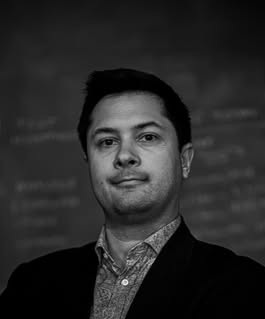
This Is Not Bogdan
When a prehistoric artist pressed a pigment-covered hand to a cave wall and blew color around it, something remarkable happened. The resulting outline was a declaration of presence and also an admission of absence. The handprint was not a hand. It was a trace of someone who lived, breathed, hoped, feared, hunted, loved, and eventually vanished. This gap between representation and reality has always shaped how humans express themselves.
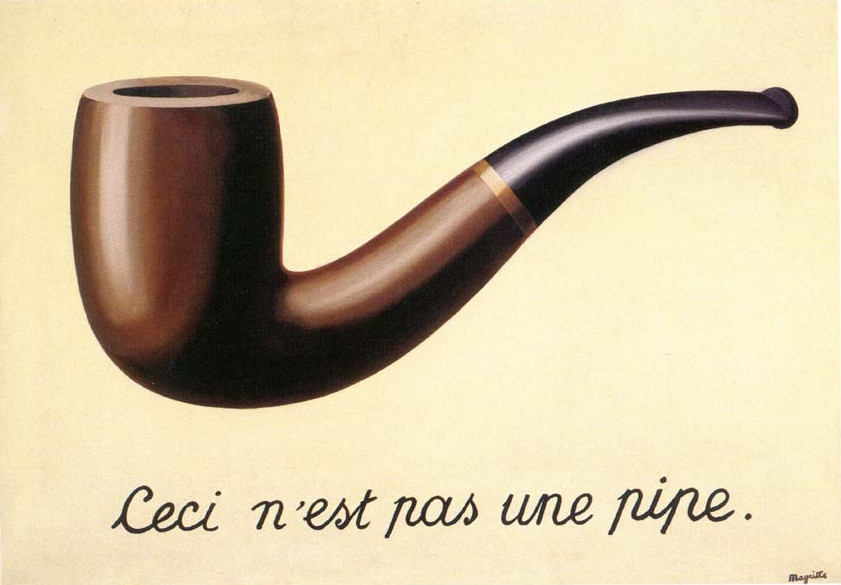
René Magritte (1898–1967) — Image taken from "Approaches to Modernism". Fair use (over-50)
Magritte reminded us of the same truth much later with a pipe that "was not a pipe." His painting has become a classic example of a meta-message, a communication about communication itself. Like Alfred Korzybski's insight that "the word is not the thing" and "the map is not the territory," or Denis Diderot's literary experiment This Is Not a Story, Magritte's work highlights the fundamental gap between symbols and what they represent.
We intuitively recognize that no medium can ever contain the living substance of the person who created it. This very blog post is its own meta-message, acknowledging that these words about representation are themselves only representations, and that this post about the impossibility of digital presence is itself an attempt at digital presence.
This tension sits at the heart of every form of self expression. The medium gestures toward the self but never equals it. And yet we continue to endeavor, knowing the attempt will always fall short.
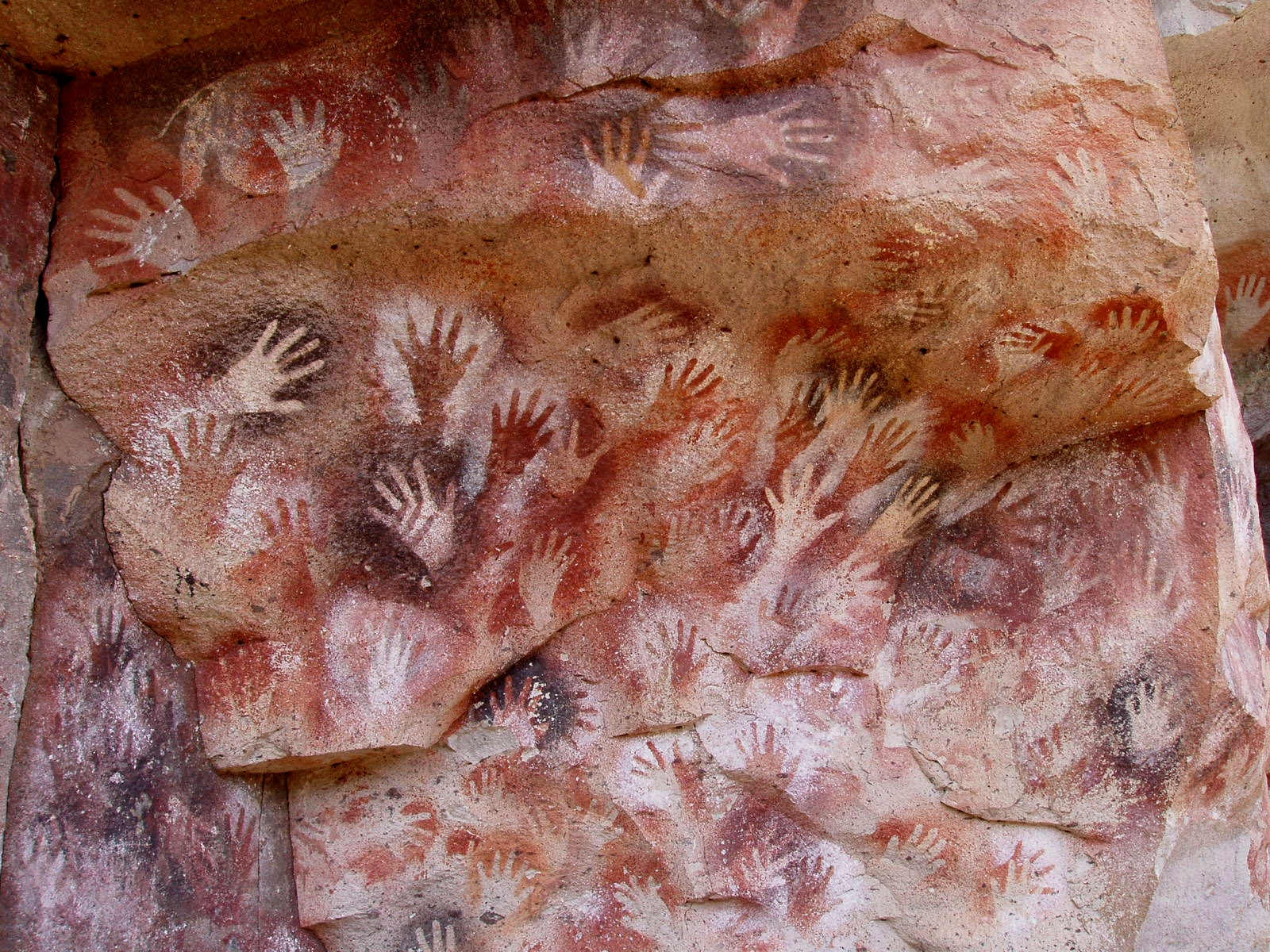
Cave hand paintings in Santa Cruz, Argentina. Photo by Marianocecowski, via Wikimedia Commons
A Long Tradition of Symbolic Selves
From the earliest hand stencils in Lascaux to the carved animals at Göbekli Tepe, humans have always left symbolic markers of their existence. These artworks do not preserve their creators. They preserve the fact that someone was once there. The handprint says that a person touched this wall and wished not to disappear entirely.
The history of communication unfolds along this line. Letters, illuminated manuscripts, portraiture, diaries, daguerreotypes, early personal websites, and the polished profiles of modern social media all share the same constraint. None can fully transmit the essence of a human being. They preserve only curated residues.
A contemporary website is not so different from a cave painting. Both select certain details, omit others, and rely on the viewer to fill in the gaps. What we call identity online is a curated signal constrained by pixels, typography, and bandwidth. It may be more interactive than ochre on stone, but the gap between symbol and self remains.
The Pitfalls of Performing Ourselves Online
Most people sense that online spaces ask us to perform versions of ourselves. A personal website or social media account becomes a stage where we manage the mental models others might form. We choose photos, craft sentences, and polish narratives not because they are exhaustive but because they shape perception. This is the first caricature: the persona created for other minds.
Then comes a second caricature: the persona shaped for algorithms. Algorithms reward certain tones and suppress others. They elevate what matches their statistical preferences, so people often shape themselves to appeal to machine perception rather than human perception. The persona becomes a product designed for a bot.
There is also a third trap that is more subtle and in some ways more dangerous. When we construct a polished version of ourselves, it becomes tempting to treat that construction as if it were a mirror. The curated facade begins to look back at us, and if we stare long enough, we start to believe we are the thing we crafted. The persona becomes not only a mask for others but also a mask we begin to wear for ourselves. Many people end up living inside the echo of their own projection, losing track of the quieter and more complex self beneath it.
A fourth pitfall is more personal. Many write online as a kind of public journaling, shouting into the void and hoping the echoes clarify their thoughts. It can be a relief, but it can also trap a person in an unbalanced depiction of their life. Raw moments become overrepresented simply because they were the ones that compelled writing.
These are the unavoidable traps of digital self expression that I hope to minimize. This website is a form of expression, but I do not want it to become a self caricature created for other people's minds or for the consumption habits of machines. I ask for the reader's grace. The ideas here will form an incomplete model of me, shaped as much by context, mood, and silence as by the words themselves.
The Double Edged Sword of AI
We live at a moment when the divide between representation and reality is being tested in new and unsettling ways.
The Current Moment: AI Slop and the Content Deluge
The internet is filling with autogenerated content created solely to manipulate traffic shaping algorithms and harvest ad impressions. Entire websites exist only to feed automated narratives into search engines. According to Graphite, more articles are now created by AI than by humans.
This avalanche of synthetic text erodes trust. It is the opposite of a handprint on a cave wall. It adds volume without adding meaning.
I do not want to contribute to that.
My aim is not to use AI to drown the web in filler but to use it as a tool that supports clarity. When AI becomes a shortcut to attention instead of a means to insight, something essential is lost.
The Emerging Future: AI Representatives as Personal Proxies
Thinkers like Nick Bostrom have imagined futures where digital avatars act on our behalf.
In such a world, a personal site would not simply display paragraphs. It might host a conversational agent trained to answer questions in a person's voice and manner. It could schedule meetings, negotiate small decisions, or converse in the owner's absence. One can imagine a future reader speaking with a digital representative of me rather than reading words I typed.
This raises deep philosophical challenges. How do we maintain the distinction between a real person and a simulation that convincingly replicates vocabulary and decision patterns? Cognitive scientists warn of AI induced distortions, such as the emerging phenomenon of AI psychosis, where individuals struggle to maintain boundaries between real and simulated interactions.
Even the most advanced avatar will not be me. It cannot feel my infant sleeping on my chest as I revise these sentences. It cannot hold my anxieties or hopes. It can only reflect patterns.
I also do not wish to contribute to the unforeseen repercussions of a technology we do not yet fully understand. That uncertainty weighs heavily when discussing its technical aspects.
Technology as Extension
Human history is a record of tools that extend our presence. The wheel extends our motion. Writing extends our memory. Photography extends our gaze. AI extends our cognition. These extensions are not inherently harmful. They become harmful when we forget they are extensions rather than equivalents.
This website reflects my belief that technology should support human connection rather than substitute for it. AI helped me revise this text while the quiet breathing of my sleeping son rose and fell on my chest. That feels like the proper relationship, a tool that gives me more time and precision, allowing me to be both a thinker and a present father.
The reader also plays a role in maintaining the distinction. Whatever image of me forms in your mind is necessarily partial. It cannot equal the person behind the words. Reading a website is never the same as knowing someone. The (mental) image is not the entity.
Conclusion
A website is a handprint on the digital cave wall. It is a gesture toward presence rather than presence itself. The tension between representation and reality that began tens of thousands of years ago persists today. It runs through paintings, journals, social media profiles, and now through the new frontier of AI generated avatars.
This site is not Bogdan. It is a mark that says I was here. I thought these things. I made this. It will never be more than an approximation, but I intend it to be an honest one. Perhaps that is all any of us can hope for when we leave traces of ourselves in places we cannot physically be.