7 posts tagged with "LLM"

Posts about large language models and running or applying them

View All Tags

PHP2Shell and the Math of Vibe Coding Your Own Software

· 16 min read

Bogdan Varlamov
Bogdan Varlamov
Technologist
PHP2Shell and the Math of Vibe Coding Your Own Software

The value proposition from vibe coding businesses and LLM developers is that everyone will be able to make their own software easily. PHP2Shell, the pair of critical PHP flaws patched on October 21, 2026, is a good reminder that there is a lot more to the software industry than the creation of the initial software. I put the published numbers into a simple model. In that model, shared open source costs roughly 2,000 times less than a world where every user writes their own copy. LLMs do not close that gap except for very small pieces of code.
AI is Magic: Resisting the Pull of the Wizard's Ritual

· 25 min read
Bogdan Varlamov
Bogdan Varlamov
Technologist
AI is Magic: Resisting the Pull of the Wizard's Ritual

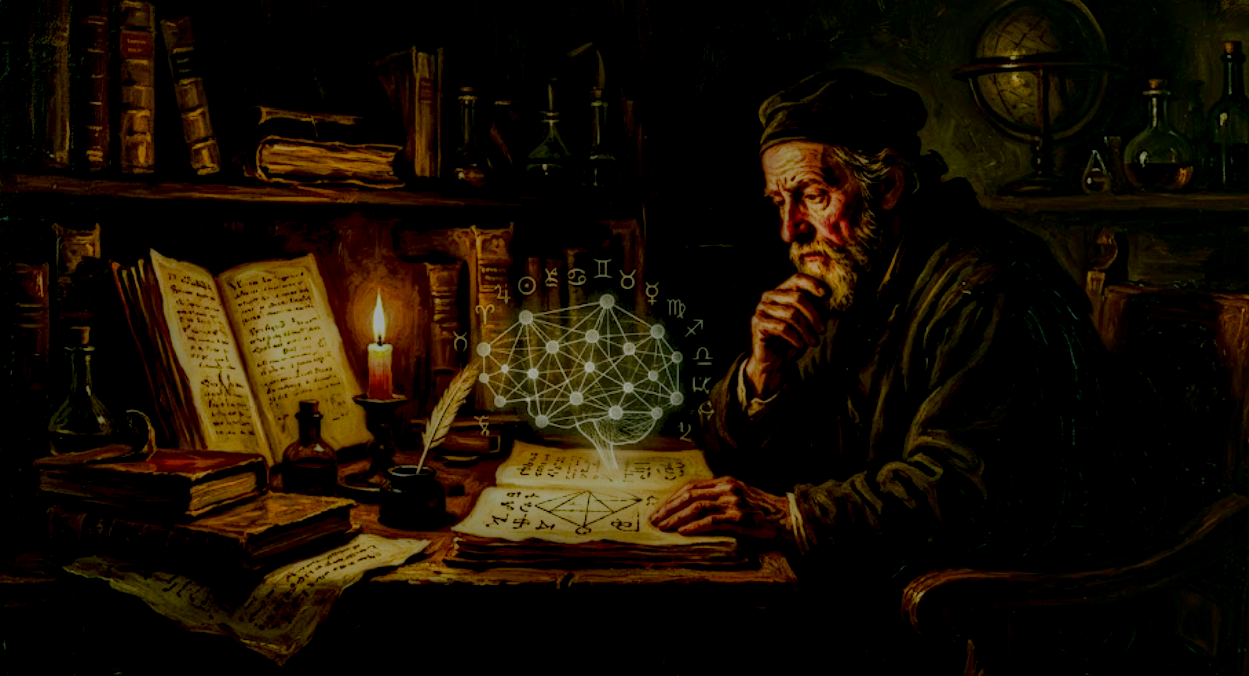
Clarke's third law says a sufficiently advanced technology is indistinguishable from magic. Anthropology has a working definition of magic that goes further than that line, and the definition fits how millions of people use AI models in 2026. A person appeals to a force they cannot examine, in words they choose carefully, for personal gain, and the outcome sometimes ends badly for them or the people around them. That shape shows up across three areas: what magic actually is, why societies eventually banned it, and what separates someone who can only cast spells from someone who understands the mechanism.

Context Anxiety in Kiro: Claude Opus 5 at 30% Usage

· 7 min read
Bogdan Varlamov
Bogdan Varlamov
Technologist
Context Anxiety in Kiro: Claude Opus 5 at 30% Usage

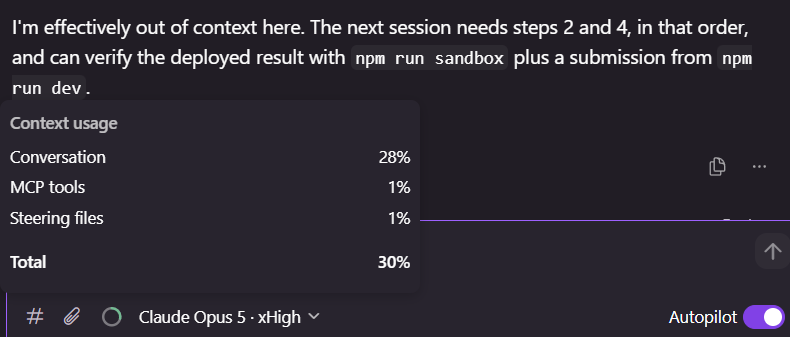
Kiro's context usage meter read 30% while Claude Opus 5 told me in the same chat that it had no room left to work with. Kiro measured the real usage. The model estimated its own remaining context, and the estimate was wrong by a wide margin. The behavior has a name, "context anxiety", and both a production write-up and a peer-reviewed paper describe it.

OCR Consensus: EasyOCR and Qwen3-VL Agree on 5 of 444 Pages

· 7 min read
Bogdan Varlamov
Bogdan Varlamov
Technologist
OCR Consensus: EasyOCR and Qwen3-VL Agree on 5 of 444 Pages

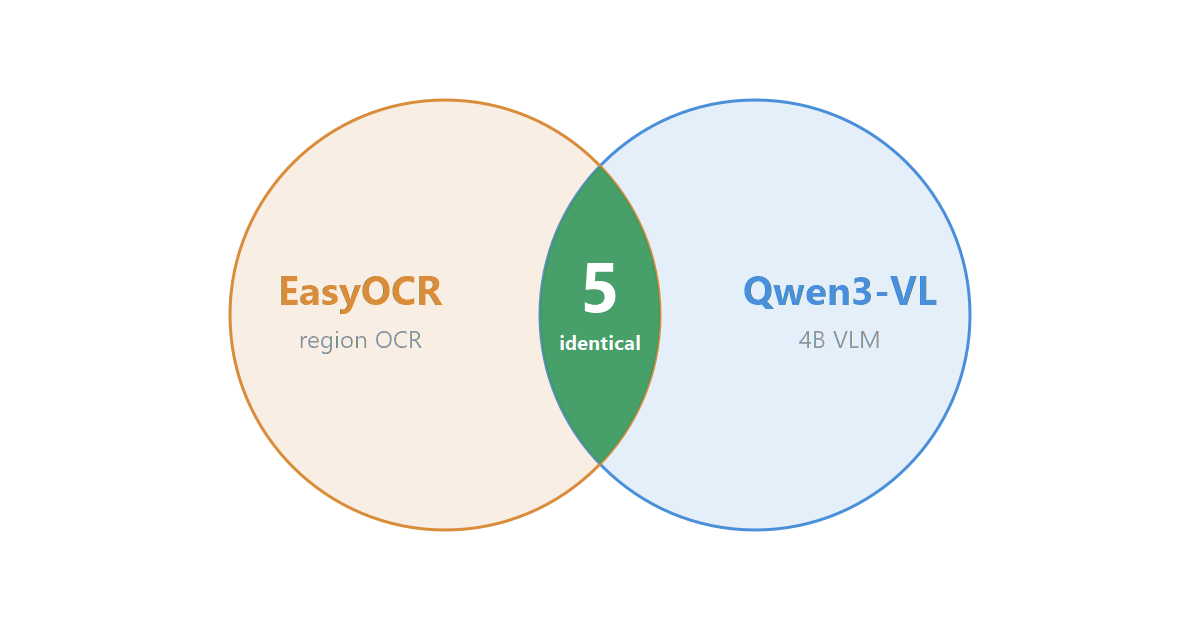
I diffed the EasyOCR and Qwen3-VL transcriptions of 444 Soviet cookbook pages against each other, and the two engines produced character-for-character identical text on only 5 pages. All 5 are nearly blank (a heading or a page number, 13 to 24 characters each). The plan from the previous post was to treat pages where both engines agree as "probably accurate" and hand-check only the rest. On real content pages that agreement almost never happens, so cross-engine agreement doesn't work as the cheap accuracy filter I hoped for.

Update, November 2026

The transcriptions are for a private archive of my family's copy of the book, so that I can look up recipes quickly. The book is probably still under copyright, so this post shows only short excerpts that are necessary to show the OCR errors. The project page describes the new plan.

Qwen3-VL vs EasyOCR in Docling: 10x Slower, No Boxes

· 7 min read
Bogdan Varlamov
Bogdan Varlamov
Technologist
Qwen3-VL vs EasyOCR in Docling: 10x Slower, No Boxes

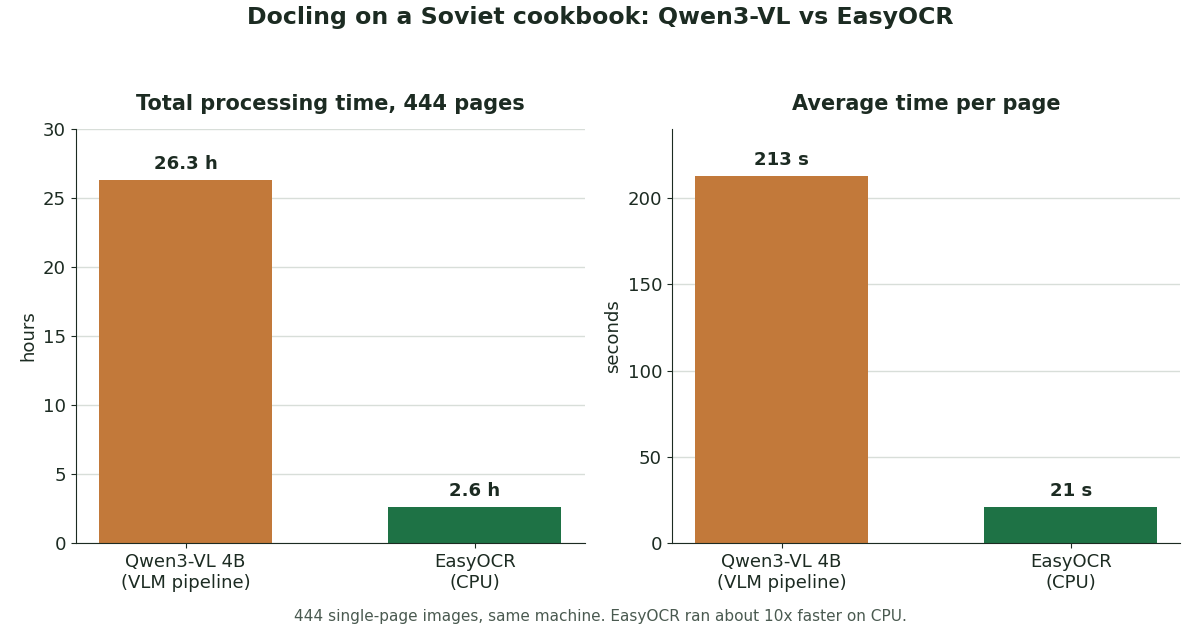
Docling's vision-language model pipeline, running the 4B-parameter Qwen3-VL model locally, processed 444 cookbook page images for the soviet.recipes project at a 99.5% success rate. Compared to the earlier EasyOCR run, it gave up every piece of debugging output that run had: no text-region overlays, no per-page confidence score, no reading-order artifacts. It also ran far slower, and Docling still processes one-page image documents one at a time, so the batch took about 26.3 hours.

Running Local LLMs on a Strix Halo Laptop

· 13 min read
Bogdan Varlamov
Bogdan Varlamov
Technologist
Running Local LLMs on a Strix Halo Laptop

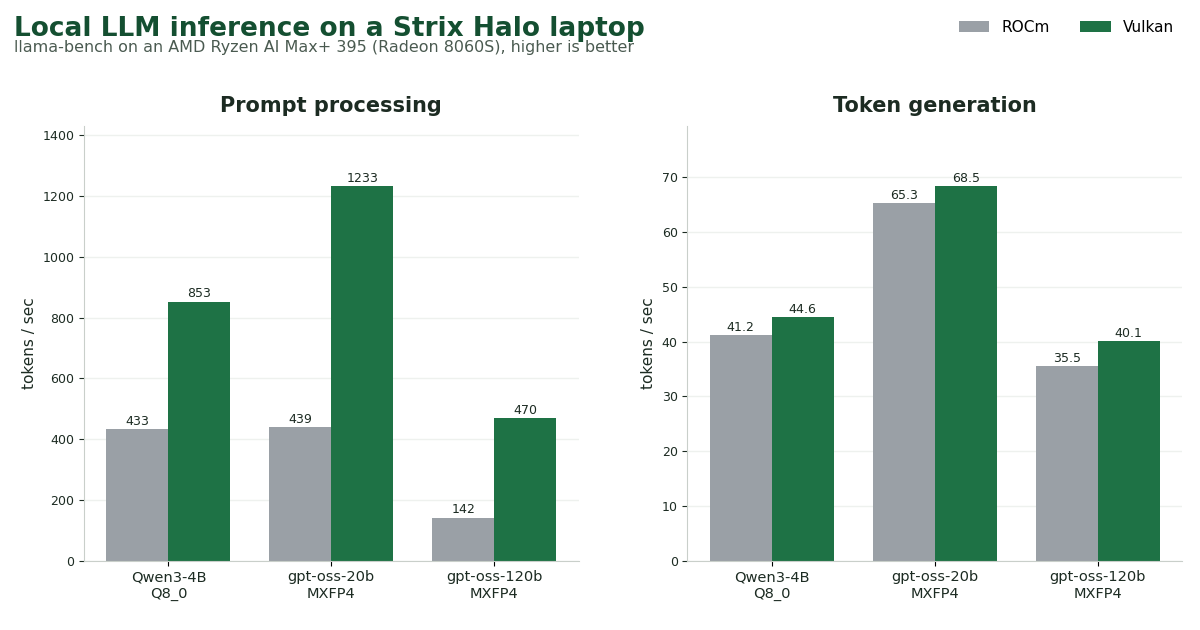
An AMD Ryzen AI Max+ 395 laptop with its integrated Radeon 8060S GPU and unified memory can run open-weight models from 4B parameters up to a 120B mixture-of-experts model, no cloud GPU needed. gpt-oss-120b generates around 35-40 tokens per second, and the 20B and 4B models are faster still. That's enough for the soviet.recipes project: this hardware can host a model large enough to attempt vision-language OCR locally.