Qwen3-VL vs EasyOCR in Docling: 10x Slower, No Boxes

· 7 min read

Bogdan Varlamov
Bogdan Varlamov
Technologist
Qwen3-VL vs EasyOCR in Docling: 10x Slower, No Boxes

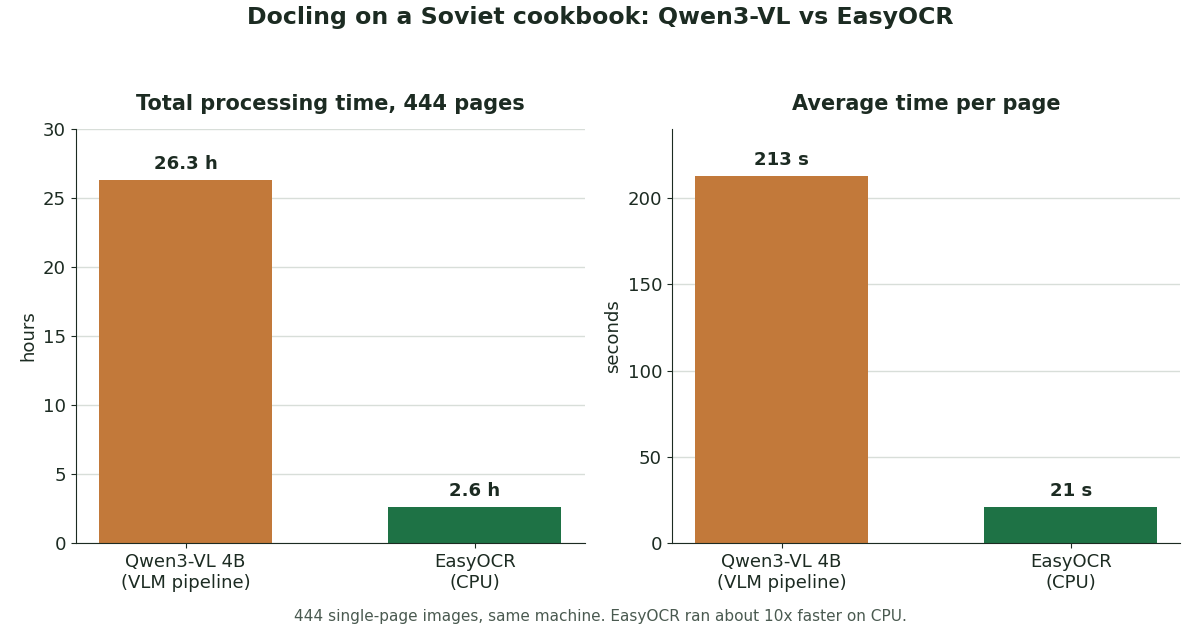
Docling's vision-language model pipeline, running the 4B-parameter Qwen3-VL model locally, processed 444 cookbook page images for the soviet.recipes project at a 99.5% success rate. Compared to the earlier EasyOCR run, it gave up every piece of debugging output that run had: no text-region overlays, no per-page confidence score, no reading-order artifacts. It also ran far slower, and Docling still processes one-page image documents one at a time, so the batch took about 26.3 hours.

Running Local LLMs on a Strix Halo Laptop

· 13 min read
Bogdan Varlamov
Bogdan Varlamov
Technologist
Running Local LLMs on a Strix Halo Laptop

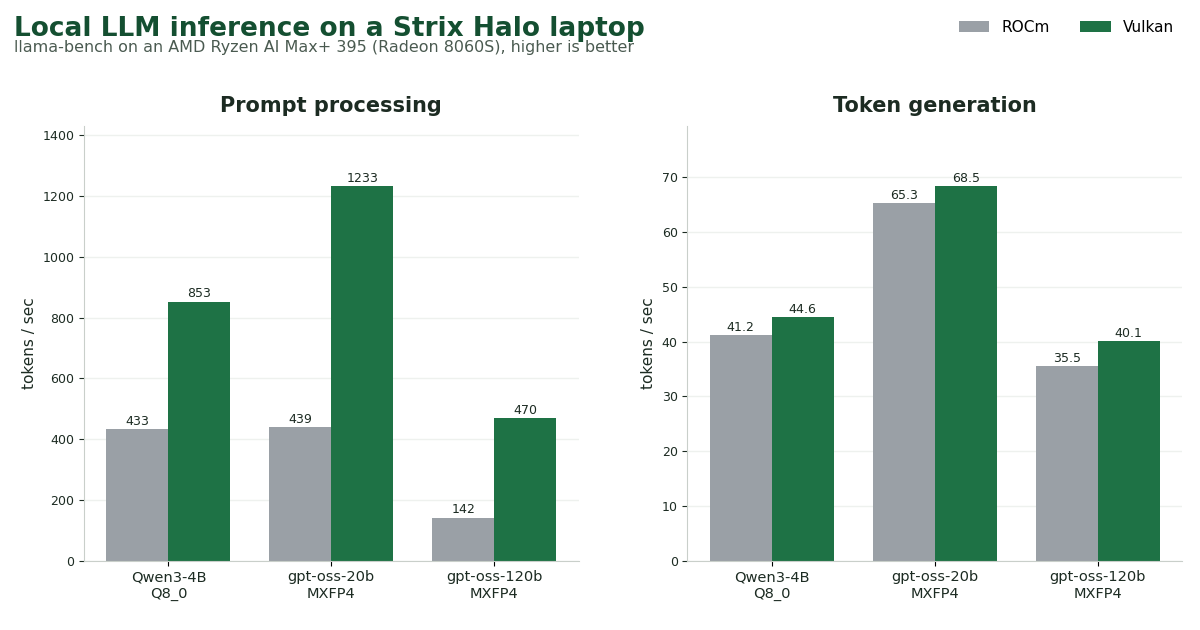
An AMD Ryzen AI Max+ 395 laptop with its integrated Radeon 8060S GPU and unified memory can run open-weight models from 4B parameters up to a 120B mixture-of-experts model, no cloud GPU needed. gpt-oss-120b generates around 35-40 tokens per second, and the 20B and 4B models are faster still. That's enough for the soviet.recipes project: this hardware can host a model large enough to attempt vision-language OCR locally.

Bank Statement Review with AI

· 5 min read
Bogdan Varlamov
Bogdan Varlamov
Technologist
Bank Statement Review with AI

The Statement Processor reads PDF bank and credit card statements, extracts every transaction, and groups them by vendor. It's finished and on GitHub under an MIT license. Building it surfaced a problem worth writing down: even on a clean, digitally-generated PDF straight from the bank, the table extraction sometimes dropped a row, usually the last one in a transaction table. A sum check that compares the extracted transactions against the total the statement already prints on itself is what made the output trustworthy.

Two Damaged HP ZBooks in a Row

· 3 min read
Bogdan Varlamov
Bogdan Varlamov
Technologist
Two Damaged HP ZBooks in a Row

Two HP ZBook units arrived damaged from shipping in a row: the first had a cracked screen, and its replacement had a screw missing from the cover. Two for two isn't the batting average anyone wants from a laptop. I ordered the ZBook with 128GB of RAM to run local AI inference experiments, and to replace an old laptop that was dying.

Wrapping Docling in a Reusable Text Extraction Pipeline

· 11 min read
Bogdan Varlamov
Bogdan Varlamov
Technologist
Wrapping Docling in a Reusable Text Extraction Pipeline

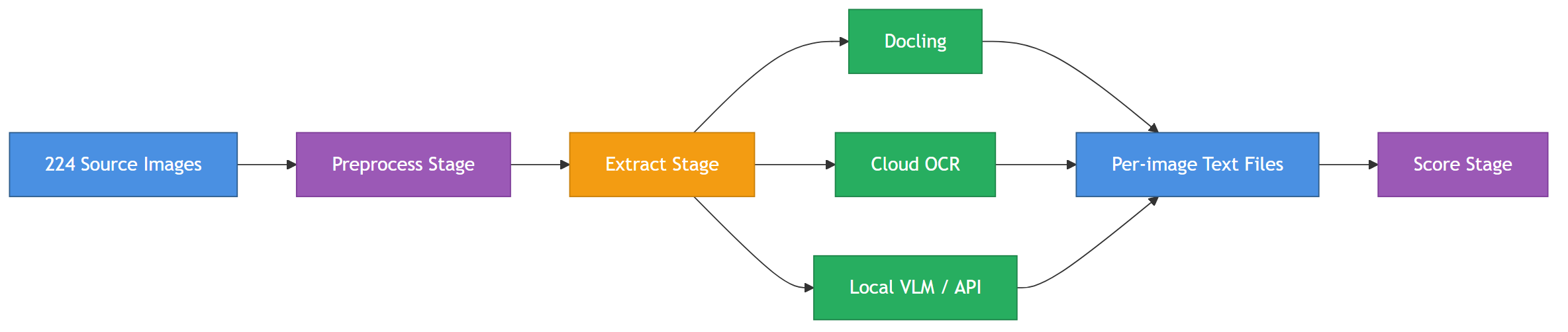
Docling already does most of what a batch text-extraction harness needs: it iterates over documents, swaps OCR backends, isolates per-document errors, and exports structured output. For the soviet.recipes project I wrap it in a thin pipeline so I can put different extraction approaches against each other on the same pages and trust the result. Docling does the extraction, but the wrapper prepares the book's curled and shadowed pages first and puts every engine behind one interface, whether it runs through Docling or bypasses it, so routing and scoring stay independent of which tool produced the text.

Testing Docling OCR on a Soviet Cookbook

· 5 min read
Bogdan Varlamov
Bogdan Varlamov
Technologist
Testing Docling OCR on a Soviet Cookbook

Docling with the EasyOCR engine extracted the Cyrillic text and page structure from a scanned Soviet cookbook, but it dropped text where the pages curved away from the camera. That data loss makes this configuration insufficient on its own for the soviet.recipes project. I tested four sample pages configured for Russian and English, using Kiro.dev to write the script.

Update, November 2026

The book is probably still under copyright, so the page images and the extracted text are now a private archive that I use to look up recipes. The screenshots below are reduced to low resolution to show the Docling markup. The project page describes the new plan.